

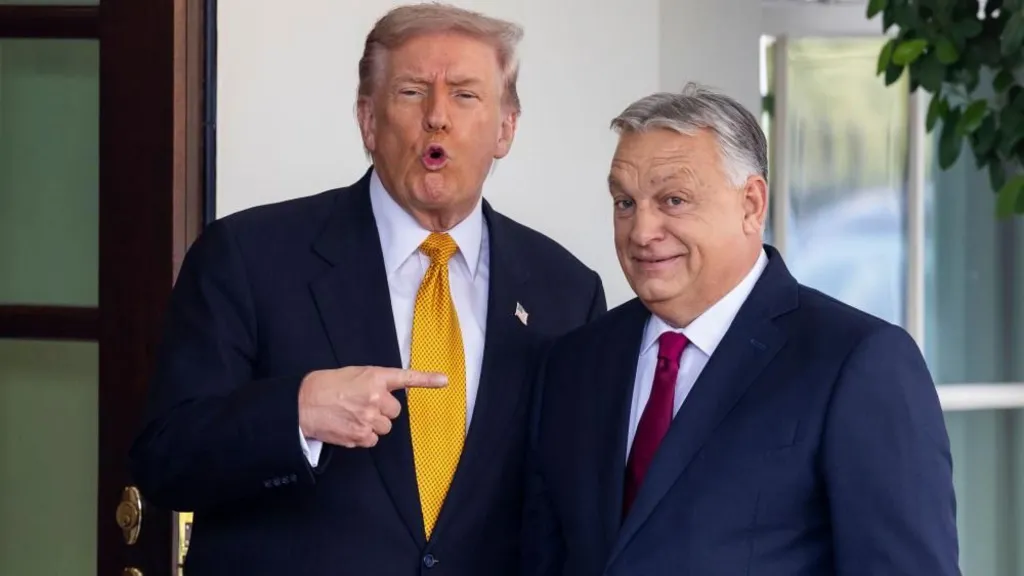
Donald Trump has officially granted Hungary a one-year exemption from U.S. sanctions on countries purchasing Russian oil and gas. The White House confirmed that the decision was made after a direct meeting between Trump and Hungarian Prime Minister Viktor Orban in Washington on Friday.
This marks a major political and economic win for Orban, who has consistently warned that sanctions on Russian energy would devastate Hungary’s economy. The landlocked Central European nation relies heavily on Russian oil and gas to power its industries and households.
Trump explained that Hungary’s geographic situation made it difficult to source energy elsewhere. “It’s very hard for him to get oil and gas from other areas,” Trump said, referring to Orban’s challenges in diversifying Hungary’s energy imports.
According to Hungarian Foreign Minister Péter Szijjártó, the agreement gives Hungary a “full and unlimited exemption” from sanctions related to oil and gas, though U.S. officials later clarified that the relief would only last one year.
The move surprised many observers since it comes just weeks after Trump’s administration imposed heavy sanctions on two major Russian energy companies and threatened penalties for nations doing business with them.
As part of the deal, Hungary will purchase hundreds of millions of dollars’ worth of U.S. natural gas. However, this new arrangement has stirred discomfort among several European nations that have long criticized Budapest’s close ties with Moscow.
Orban has repeatedly defended Hungary’s dependence on Russian energy, calling it a practical issue rather than a political choice. “Pipelines are not ideological or political—they are a physical reality,” he said, emphasizing Hungary’s lack of access to seaports.
Trump and Orban also discussed the ongoing war in Ukraine during their meeting. Trump suggested that Orban’s close understanding of Russian President Vladimir Putin could help push the conflict toward a peaceful end. Orban, however, maintained that most Western governments were unrealistic about Ukraine’s chances of winning the war, noting that only the U.S. and Hungary were seriously pushing for peace.
Despite friction between Hungary and the European Union over democracy and migration issues, Trump praised Orban’s leadership, urging Europe to “respect this leader very, very strongly because he’s been right on immigration.”
The exemption strengthens the long-standing alliance between Trump and Orban—two leaders known for their nationalist rhetoric and shared skepticism of global institutions. For Orban, it also provides critical breathing space for Hungary’s struggling economy ahead of next year’s elections.