By: Okem J Sas RichBoi
(Campus Media House)
TVET Emerged as a Game-Changer for Uganda’s Youth
In a bid to revolutionize the education sector and equip learners with practical skills, Technical and Vocational Education and Training (TVET) has emerged as a powerful alternative path to skills, employment, and further education in Uganda.
According to Kaziba Stephen, an educator and advocate of TVET, “TVET is not for failures nor a second-rate option; it is a legitimate parallel pathway to the academic route.” With many parents and stakeholders still unaware of the opportunities and requirements of TVET, Kaziba’s message aims ;
After completing Senior Four, learners in Uganda have the opportunity to pursue Technical and Vocational Education and Training (TVET). However, many parents and stakeholders are not adequately informed about this pathway, its requirements, and the opportunities it offers.
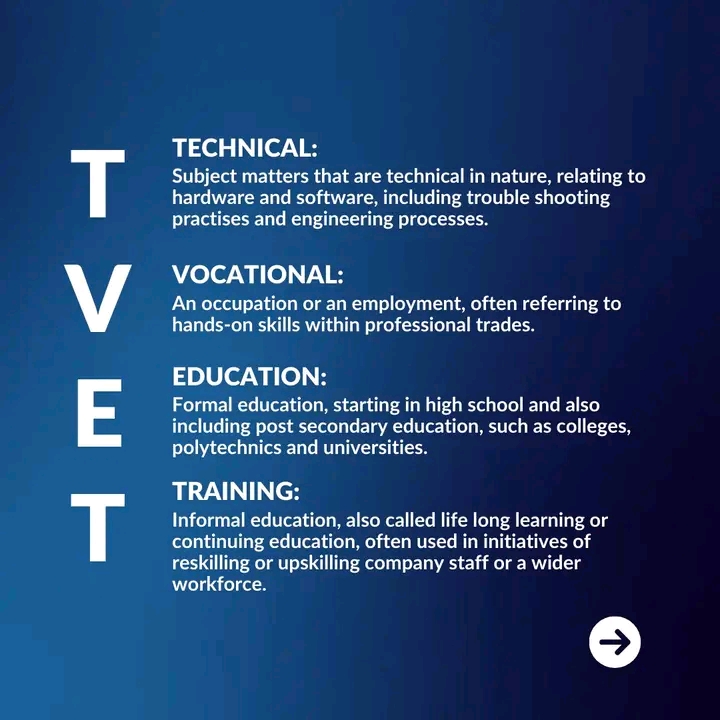
TVET is a form of education and training that equips learners with practical skills, technical knowledge, appropriate attitudes, and hands-on competencies for specific trades, professions, and occupations. Contrary to popular belief, TVET is not for failures nor a second rate option; it is a legitimate parallel pathway to the academic route.
Entry into Vocational Training After S.4
A learner may enrol in vocational training institutions or work-based training providers after obtaining the Uganda Certificate of Education (UCE).
Minimum Requirement
* UCE certificate (Result 1)
Programme Structure
* National Certificate: Approximately 2 years
* Progression to National Diploma:Additional 2 years (usually requires credits in the relevant field)
Under the National Qualifications Framework, a “National Certificate is placed at a level comparable to A Level”, although the two pathways differ in orientation A Level is academically focused, while TVET emphasises practical competency and employable skills.
Assessment and certification are conducted by the Uganda Vocational and Technical Assessment Board (UVTAB), which registers, examines, and certifies candidates in TVET programmes.
Availability of Training Institutions
Uganda has a wide network of TVET providers, including:
* Government aided vocational training institutions (about 85)
* Approved private vocational training institutions (about 60)
* TVET colleges offering National Diplomas
Some programmes are offered only in specific institutions depending on available facilities, equipment, and expertise.
Examples of Certificate Courses Offered
Government aided institutions offer a wide range of programmes across technical, agricultural, business, and service sectors.
# Engineering and Technical Fields
* Automotive Mechanics
* Building Construction
* Plumbing
* Welding and Metal Fabrication
* Electrical Installation Systems and Maintenance
* Electronics Technology
* Refrigeration and Air Conditioning
* Machining and Fitting
* Woodwork Technology
# Agriculture and Environment
* Agricultural Production
* Crop Production
* Animal Production
* Agricultural Engineering Mechanics
* Ecological Organic Agriculture
# Hospitality and Creative Industries
* Hotel and Institutional Catering
* Tourism and Hospitality Management
* Fashion and Garment Design
* Cosmetology and Beauty Therapy
* Hairdressing
* Painting and Decoration
# Business, ICT, and Administration
* Accounting and Business Finance
* Business Administration and Management
* Human Resource Management
* Procurement and Logistics Management
* Secretarial and Information Management
* Records and Information Management
* Library and Information Science
* Journalism and Media Studies
* ICT (Information and Communication Technology)
* Public Administration and Management
# Social and Community Services
* Social Work and Social Administration
* Guidance and Counselling
* Food Science and Nutrition
>Health Training Institutions (HTIs)
Learners interested in healthcare careers can enrol in Health Training Institutions after S.4. Uganda has:
* About 12 government-aided health training institutions
* Over 100 private health training institutions
Common Certificate Programmes
* Certificate in Nursing
* Certificate in Midwifery
* Certificate in Comprehensive Nursing
* Certificate in Mental Health Nursing
Duration: Approximately 2½ years
After completing a certificate, learners may pursue a *Diploma Extension* (about 1½ years), although some institutions require work experience and professional registration. Progression can continue to Bachelor’s degrees and higher qualifications.
Assessment and certification for health programmes are handled by the Uganda Health Professions Assessment Board (UHPAB).
Typical Entry Requirements for Health Programmes
* At least a C in Biology, Chemistry, and Physics
* At least a D in English and Mathematics
* Minimum age of 18 years
* Medical fitness
Private institutions may offer additional health-related courses with varying requirements.
Career Outcomes and Opportunities
TVET graduates are well positioned for:
* Formal employment in industry and service sectors
* Self-employment and entrepreneurship
* Apprenticeships and workplace advancement
* Further education at diploma, degree, and higher levels
Many sectors in Uganda face shortages of skilled technicians and artisans, making TVET graduates highly employable both locally and internationally.
Advantages of the TVET Route
1. Early Acquisition of Employable Skills
Learners graduate with practical competencies that can immediately generate income.
2. Hands On Learning
Training emphasises real-world tasks, projects, and workplace experience.
3. Addressing Skills Gaps
Programmes are often aligned with labour-market needs and developed in consultation with industry.
4. Opportunities for Entrepreneurship
Graduates can start their own businesses using acquired skills.
5. Flexible Academic Progression
Learners can advance from certificate to diploma, degree, and beyond.
6. Earlier Economic Independence
Compared to long academic pathways, TVET can lead to quicker entry into productive work.
7. Reduced Reliance on White-Collar Employment
TVET prepares learners for both employment and self-reliance.
#Final Thought
The TVET pathway is not a second class option but a powerful route to meaningful careers, innovation, and economic development. For learners who prefer practical learning and skill acquisition, it can be the most suitable and rewarding path after S.4.
A National Certificate places a learner at a qualification level comparable to A Level, but with a different orientation competency, productivity, and employable skills.
What matters most is aligning the learner’s interests, abilities, and goals with the opportunities available.
TVET transforms skills into livelihoods and potential into productivity.
Kaziba Stephen
Educator
kazibastephen42@gmail.com
To shed light on this often-overlooked pathway.
Okem J Sas RichBoi
Readers: 18767