

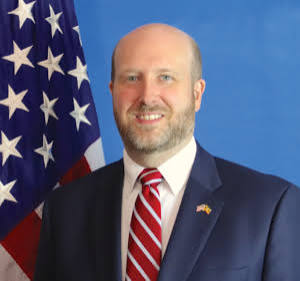
The United States government has recalled its ambassador to Uganda as part of a wide-ranging shake-up of American diplomatic missions ordered by President Donald Trump, with African countries bearing the greatest impact of the sudden changes.
William W. Popp, the U.S. ambassador to Uganda and a long-serving career diplomat, has been asked to leave his post in Kampala without an immediate replacement being named. The decision also affects American envoys stationed in Rwanda and Burundi, according to diplomatic sources familiar with the matter.
The recall of Popp is part of a broader move that has seen nearly 30 ambassadors and senior U.S. diplomats around the world ordered to vacate their positions. Current and former U.S. officials say Africa has been hit harder than any other region, with ambassadors in at least 13 African countries notified to leave by mid-January.
Those affected include diplomats posted to Burundi, Cameroon, Cape Verde, Gabon, Côte d’Ivoire, Madagascar, Mauritius, Niger, Nigeria, Rwanda, Senegal, Somalia and Uganda. Similar recalls have also been reported in parts of Europe, Asia, the Middle East and the Americas.
What has raised concern among observers is that many of the recalled envoys are career Foreign Service officers. Such diplomats are usually retained across changes in political leadership to ensure stability and continuity in international relations.
A senior official at the U.S. State Department, quoted by international media, defended the move, describing it as a normal administrative process. The official noted that ambassadors serve as personal representatives of the president and that any administration has the authority to appoint envoys who align with its policy priorities, particularly the “America First” agenda.
However, critics argue that the recalls signal a deeper political agenda. They point to earlier statements by the Trump administration expressing intent to dismantle what it describes as an entrenched “deep state” within the civil service. Opponents say this approach amounts to sidelining experienced professionals in favour of political loyalty.
Professional bodies such as the American Foreign Service Association have warned that recalling career ambassadors without clear justification undermines long-established diplomatic norms and risks turning the U.S. foreign service into a politicised institution.
The decision leaves several U.S. embassies, including the one in Kampala, without Senate-approved ambassadors at a sensitive time. Washington is currently engaged in security cooperation, trade negotiations and regional stability efforts in East Africa and the wider Great Lakes region.
Diplomats familiar with the process revealed that some ambassadors were informed through brief phone calls from Washington, often without detailed explanations. Many were reportedly taken by surprise, as career envoys typically complete their full terms regardless of political transitions at home.
So far, the U.S. administration has not announced who will replace the recalled ambassadors. Analysts say the lack of clarity could weaken America’s diplomatic influence in Uganda, Rwanda and Burundi as the Trump administration pushes ahead with reshaping U.S. foreign policy around its core political vision.